Should You Buy or Build a Home in Costa Rica? Pros, Costs and Key Considerations
Should you buy an existing home in Costa Rica or purchase land and build a property from scratch? This is one of the most important decisions facing international buyers, particularly those considering Sámara and Playa Carrillo on the Nicoya Peninsula.
A completed home can offer a faster route to ownership and the opportunity to inspect the property before committing to a purchase. Building from scratch gives you greater control over the layout, finishes and features, but introduces additional considerations involving permits, construction costs, water availability and project management.
Neither option is automatically cheaper or safer. An attractively priced existing property may require significant renovations, while an apparently affordable building plot may need expensive preparation before construction can begin.
This guide compares the advantages, disadvantages, costs and timelines of both approaches. It also examines real properties marketed by Coldwell Banker Sámara to help buyers evaluate their options in Guanacaste.
Understanding the Property Market in Sámara and Playa Carrillo
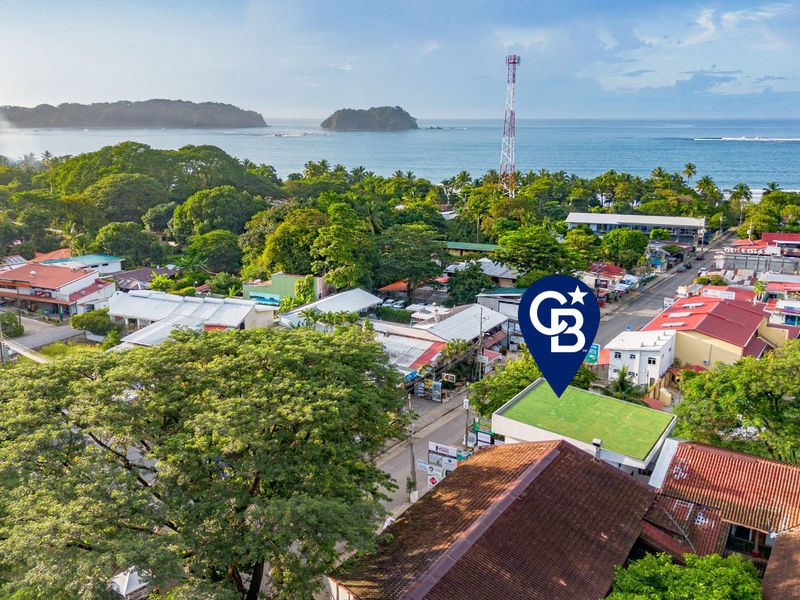
Sámara offers a combination of established residential neighbourhoods, properties near town amenities, hillside homes and undeveloped land. Nearby Playa Carrillo includes detached houses, larger residential plots and land with ocean views.
For buyers seeking a home close to restaurants, shops and the beach, it may be difficult to find a vacant plot offering a location comparable to an existing house. In other areas, buying land may provide more space or the opportunity to create a home tailored to specific requirements.
Actual property inventory is more useful than an estimated regional average. Coldwell Banker Sámara markets both completed homes for sale and building land in Costa Rica.
Buyers should compare properties with similar access, utilities, locations and permitted uses rather than assuming that purchasing land always offers better value.
Buying an Existing Home: Advantages and Disadvantages
The main advantage of buying an existing property is that much of what you are purchasing can be inspected before the transaction is completed.
You can examine the layout, assess the neighbourhood, investigate the building's condition and check whether the home meets your everyday requirements.
Advantages of Buying a Completed Home
- Potentially faster occupancy: You may be able to move in once the purchase has been completed and the agreed handover arrangements have taken place.
- Visible property condition: Inspections can help identify defects, repairs and maintenance requirements.
- Established utilities: Water, electricity, drainage and access arrangements can be checked on site.
- Greater price clarity: The agreed purchase price is known, although closing costs and potential repairs must still be considered.
- Established location: Buyers can experience the neighbourhood rather than relying entirely on development plans.
Potential Disadvantages
An existing home may not offer your ideal bedroom arrangement, accessibility features, outdoor space or energy-efficient systems. Alterations may be possible, but structural changes can require additional permits and substantial investment.
Older buildings may also contain hidden defects. In Guanacaste, inspections should pay particular attention to moisture, roof condition, electrical installations, pest damage, drainage and corrosion.
Do not assume that an existing building necessarily has every required approval. An independent lawyer should verify the relevant permits and the legal status of any improvements.

Real Example: Buying an Existing Home in Playa Carrillo
Coldwell Banker Sámara advertises Casa Erika in Playa Carrillo for US$247,500.
The listing describes a one-bedroom, one-bathroom home built in 2011, with approximately 94 m² of floor space on a 694 m² plot. Located in Bosques del Lago, the property features gardens, air conditioning and an established residential setting.
For someone seeking a smaller permanent residence or holiday home, purchasing this type of property could avoid the need to buy land and manage an entire construction project.
However, prospective buyers should still arrange independent inspections, confirm legal title and budget for garden maintenance, repairs and transaction expenses.
Another Option: Casa Tres Olas
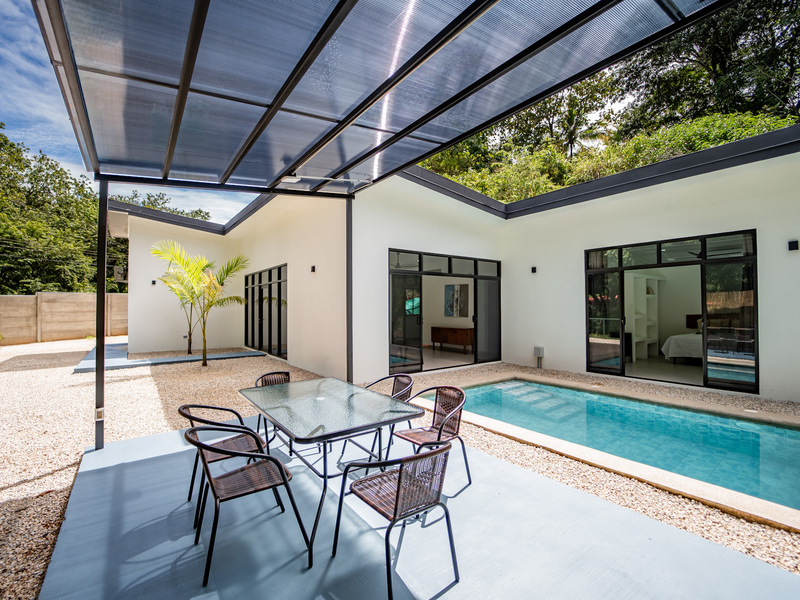
For buyers seeking more space, Casa Tres Olas near Playa Carrillo is advertised at US$419,000.
The listing describes a three-bedroom, two-bathroom home with approximately 140 m² of floor space, a swimming pool and a 906 m² plot in Bosque del Lago.
It is marketed as a newly constructed property, although the published description refers to completion being forthcoming. Buyers should therefore confirm its current status, inspect the property and verify that all required approvals and final works are in order.
Both properties illustrate how existing or recently built homes may offer a useful alternative to managing a custom construction project.
Building a Home in Costa Rica: Main Advantages
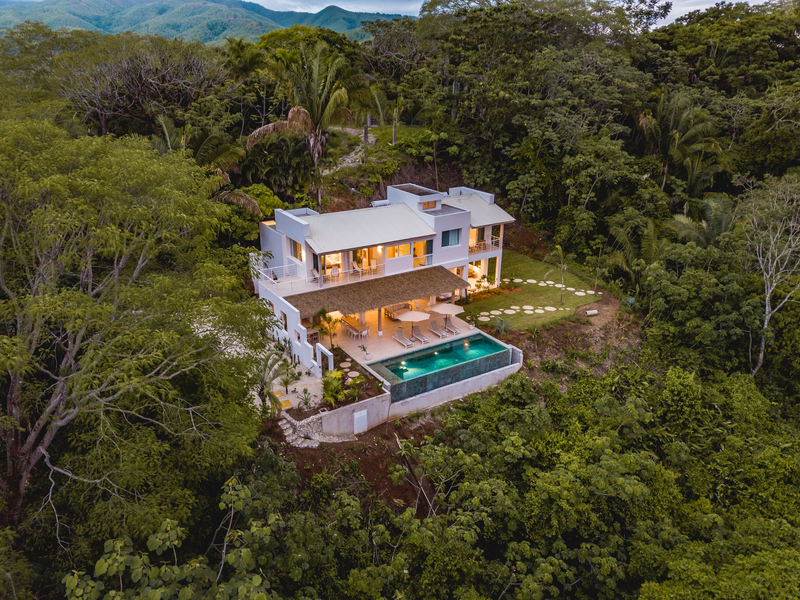
Building a new home gives buyers greater influence over the finished property. They can work with an architect to determine the size, orientation, accessibility, ventilation and materials best suited to their requirements.
For some international buyers, this flexibility is particularly valuable. A custom-built home can incorporate step-free access, a separate guest bedroom, spacious shaded terraces or energy-efficient features that may be difficult to find in the resale market.
The design can also respond to the specific plot, allowing the architect to consider views, prevailing breezes, rainfall and natural drainage.
However, purchasing land does not automatically give you permission to build. Buyers must confirm what development is legally permitted and whether the necessary services and approvals can be obtained.
The Challenges of Custom Construction
A construction project involves more professionals and decisions than purchasing a completed home. Architects, engineers, builders, surveyors and legal advisers may all be involved at different stages.
Site preparation, retaining walls, drainage, utilities, permits, imported finishes and design changes can all affect the overall budget.
For owners living overseas, project supervision is particularly important. Clear contracts, staged payments, regular reporting and independent inspections of completed works can help reduce avoidable risks.

Real Building Plots Available Near Sámara and Carrillo
Coldwell Banker Sámara's land portfolio includes different types of properties, from smaller residential plots to extensive land parcels with ocean views.
Lote Peninsula: Playa Carrillo
Lote Peninsula in Bosques de Playa Carrillo is advertised at US$249,000.
The 1,300 m² plot offers panoramic ocean views. The listing states that building permits, plans for a proposed 500 m² home and a water meter are included, with electricity and fibre-optic internet available.
These are significant advantages, but buyers should confirm whether existing permits remain valid, whether the plans suit their requirements and what additional approvals or expenses might be necessary.
Lot Guanabana: A Lower-Priced Land Example
Coldwell Banker Sámara also advertises Lot Guanabana near Playa Carrillo for US$89,000, covering approximately 1,100 m².
This lower asking price demonstrates the variation within the local land market. However, it does not mean that constructing a completed home on the plot would necessarily be cheaper than purchasing an existing property.
Before making an offer, investigate planning permissions, road access, water availability, terrain conditions and the cost of connecting utilities.
How Much Does It Cost to Build a House in Costa Rica?
Construction costs vary according to the home's size, finish specifications, land conditions, professional services and infrastructure requirements.
Coldwell Banker Sámara's published frequently asked questions provide a general construction cost reference of approximately US$90 to US$120 per square foot, with potentially higher costs depending on the design and finishes.
This figure should be used as preliminary guidance from the agency, not as a fixed contractual quote for 2026. The range does not establish which items are included in a particular contract or guarantee that a complex hillside project can be constructed at that price.
When comparing quotations, check whether they include architectural and engineering fees, site preparation, utility connections, permits, landscaping, swimming pools, taxes and contingencies.
Illustrative Construction Cost Calculation
Imagine a buyer considering Lote Peninsula at its advertised price of US$249,000 who wishes to construct a 150 m² home.
An area of 150 m² is approximately 1,615 square feet. Applying the agency's general reference of US$90 to US$120 per square foot produces an indicative base construction cost of approximately US$145,000 to US$194,000.
This is an illustrative calculation only and does not represent a priced construction proposal. It may exclude important expenses and should not be used as a final budget until a qualified local professional has assessed the actual site and design.
| Budget Component | Indicative Amount |
|---|---|
| Lote Peninsula advertised price | US$249,000 |
| 150 m² base construction calculation | US$145,000–US$194,000 |
| Land plus illustrative base construction | US$394,000–US$443,000 |
| Additional project expenses | Require project-specific quotations |
This scenario illustrates why the price of land should never be compared directly with the advertised price of a completed home. The entire project also requires a realistic allowance for professional fees, construction approvals, site preparation and unexpected expenses.
What Permits Are Required to Build in Guanacaste?
Construction permits in Costa Rica require professional plans and the involvement of the relevant public authorities. Architects and engineers registered with the Colegio Federado de Ingenieros y de Arquitectos (CFIA) use the country's digital systems for technical documentation and municipal approval applications.
Depending on the property, preliminary requirements may include municipal confirmation of permitted land use, cadastral plans, water availability, building setbacks and other approvals.
The CFIA APC Requisitos system explains the procedure for requesting certain preliminary construction requirements.
Essential Checks Before Buying Building Land
- Ownership and boundaries: Confirm the registered owner and review the cadastral survey.
- Land use: Establish whether the proposed residential development is permitted.
- Water availability: Obtain confirmation from the authorised supplier.
- Access: Verify legal road access and the condition of any private roads.
- Terrain: Investigate slopes, drainage, ground conditions and potential retaining-wall requirements.
- Environmental restrictions: Check for protected areas, watercourses and coastal development restrictions.
- Utilities: Obtain estimates for electricity, communications and wastewater treatment.
A plot should not be considered ready for construction simply because building a house appears physically possible.

How Long Does It Take to Buy or Build a Home?
Buying an existing property may allow earlier occupancy, provided the seller's documentation is satisfactory, contractual conditions are met and the property is ready for handover.
Building follows a different sequence: purchasing land, appointing professionals, completing the design, obtaining approvals, carrying out construction and arranging final inspections or required sign-offs.
Actual timescales vary considerably. Difficult building terrain or projects requiring additional environmental approvals may take longer than straightforward residential construction.
| Buying an Existing Home | Building a New Home |
|---|---|
| Property search and viewings | Land search and feasibility assessments |
| Offer and legal due diligence | Land acquisition and design development |
| Inspections and contract completion | Technical plans and permit applications |
| Closing and agreed handover | Construction, inspections and handover |
For buyers who need accommodation by a particular date, it is advisable to obtain realistic professional schedules for both options. Do not assume that every existing-home purchase completes within 90 days or that every custom-built home is finished within 18 months.
Buying vs Building: Detailed Comparison
| Factor | Buying an Existing Home | Building a Custom Home |
|---|---|---|
| Time to occupancy | Potentially shorter | Includes design, permits and construction |
| Design control | Limited without renovations | Greater flexibility |
| Budget certainty | Known price, although inspection risks remain | Contract variations and site-related risks |
| Utilities | Existing systems can be inspected | Connections must be verified and budgeted |
| Management effort | Due diligence and purchase process | Ongoing construction supervision |
| Rental potential | Potentially sooner, where legally permitted | After completion and relevant approvals |
Financing and Ownership Considerations
Financing an existing property and financing a construction project may involve different lending criteria. Some buyers use available funds, while others explore local loans, seller financing or borrowing secured against assets in other countries.
Do not assume that a non-resident buyer will automatically qualify for a particular mortgage rate, deposit requirement or repayment term. Obtain lender-specific information before committing to a purchase that depends on financing.
For construction projects, staged payments should be supported by a detailed written contract, agreed milestones and appropriate professional verification.
Foreign buyers can generally purchase privately titled real estate in Costa Rica without residency, but coastal concession land is subject to different requirements.
Costa Rica also generally applies a 1.5% property transfer tax to applicable transfers. Closing expenses and the legal implications of owning property through a Costa Rican company should be reviewed with independent advisers.
When Does Buying an Existing Home Make More Sense?
Buying may be the better option if you want to move relatively soon, prefer to inspect a completed property and have limited time to manage a construction project.
It may also appeal to buyers who value established gardens, existing access arrangements and a neighbourhood they can experience before purchasing.
A completed home that meets most of your requirements may sometimes offer better value than purchasing land and recreating similar accommodation through a lengthy construction project.
When Is Building a Custom Home Worth Considering?
Building may be appropriate for buyers who need a particular layout, have more time available and possess the resources to manage professional design and construction.
It may be attractive if available resale properties do not meet important requirements such as step-free access, separate workspaces, energy efficiency or a particular connection between the home and its surrounding landscape.
However, the decision should be based on a land feasibility assessment and credible construction quotations rather than relying only on the prospect of achieving a lower cost per square metre.

Your Buy-or-Build Decision Checklist
Before choosing between the two approaches, consider the following questions.
- When do you realistically need to move into the property?
- What is your total budget, including closing expenses and contingencies?
- Are suitable completed homes available in your preferred neighbourhood?
- Would you accept an existing layout or need substantial alterations?
- Can the proposed land legally accommodate your intended project?
- Have you verified water, electricity, road access and drainage?
- Can you supervise construction or appoint an independent project manager?
- Have you compared actual property listings with detailed builder quotations?
- How much financial uncertainty can you comfortably accommodate?
If your priorities are moving in sooner and keeping the process relatively simple, existing homes deserve close attention. If design flexibility is essential and you have time for a more involved project, buying land and building could be worth exploring.
Frequently Asked Questions
Is it cheaper to buy or build a home in Costa Rica?
Neither option is always cheaper. Construction costs depend on land price, terrain, permits, materials and project specifications. Buying involves the agreed purchase price, closing expenses and necessary repairs. Compare complete budgets for actual properties before deciding.
How much does land cost in Sámara?
Land prices vary considerably. Examples in the wider Sámara and Carrillo market include Lot Guanabana at US$89,000 and Lote Peninsula at US$249,000. These are prices for individual advertised plots, not a reliable average price per square metre for the whole area.
How much does it cost to build a house in Guanacaste?
Coldwell Banker Sámara's published FAQ gives a general reference of approximately US$90 to US$120 per square foot, potentially more for demanding specifications. Actual 2026 costs should be confirmed through qualified contractor quotations covering professional fees, infrastructure and site-specific requirements.
How long does it take to build a new home?
The timeline depends on design, permits, site preparation and construction complexity. The architect and builder should prepare a realistic programme after assessing the individual project. Additional approvals may extend the process.
Can foreigners buy land and build in Costa Rica?
Foreign buyers can generally acquire privately titled land, but construction remains subject to planning, environmental and permit requirements. Coastal concession areas have different ownership and development restrictions. Independent legal advice is essential.
Do you need confirmation of water availability before building?
Confirmation of potable water availability is an important part of the approval process for many construction projects. Buyers should check the requirements applicable to their proposed property and obtain documentation from the authorised supplier before purchasing land.
Should I purchase property personally or through a Costa Rican company?
Both options can have legal, tax, administrative and inheritance implications. Ownership through a company is not automatically cheaper or exempt from applicable transfer taxes. Consult an independent Costa Rican lawyer and a tax adviser familiar with your country of residence.
Find Homes and Building Land with Coldwell Banker Sámara
The decision to buy or build a home in Costa Rica should begin with your preferred location, intended use, available budget and realistic timeline.
Coldwell Banker Sámara can help international buyers explore homes and residential land in Sámara, Playa Carrillo and the surrounding Nicoya Peninsula, providing local market information to help them compare the alternatives.
Explore existing properties for sale, discover building plots in Playa Carrillo, or learn more about living in Playa Carrillo.
For help comparing your options, contact the Coldwell Banker Sámara team, call +506 2656 0856, or email info@coldwellbankersamara.com.
This article provides general information and does not constitute personalised legal, construction, financial or tax advice. Advertised prices, property availability, construction costs and legal requirements may change. Obtain independent professional advice and written quotations before buying or building.